

The Real Cost of Sitting All Day

March 17, 2026

Sitting too long isn’t harmless—your body keeps score.

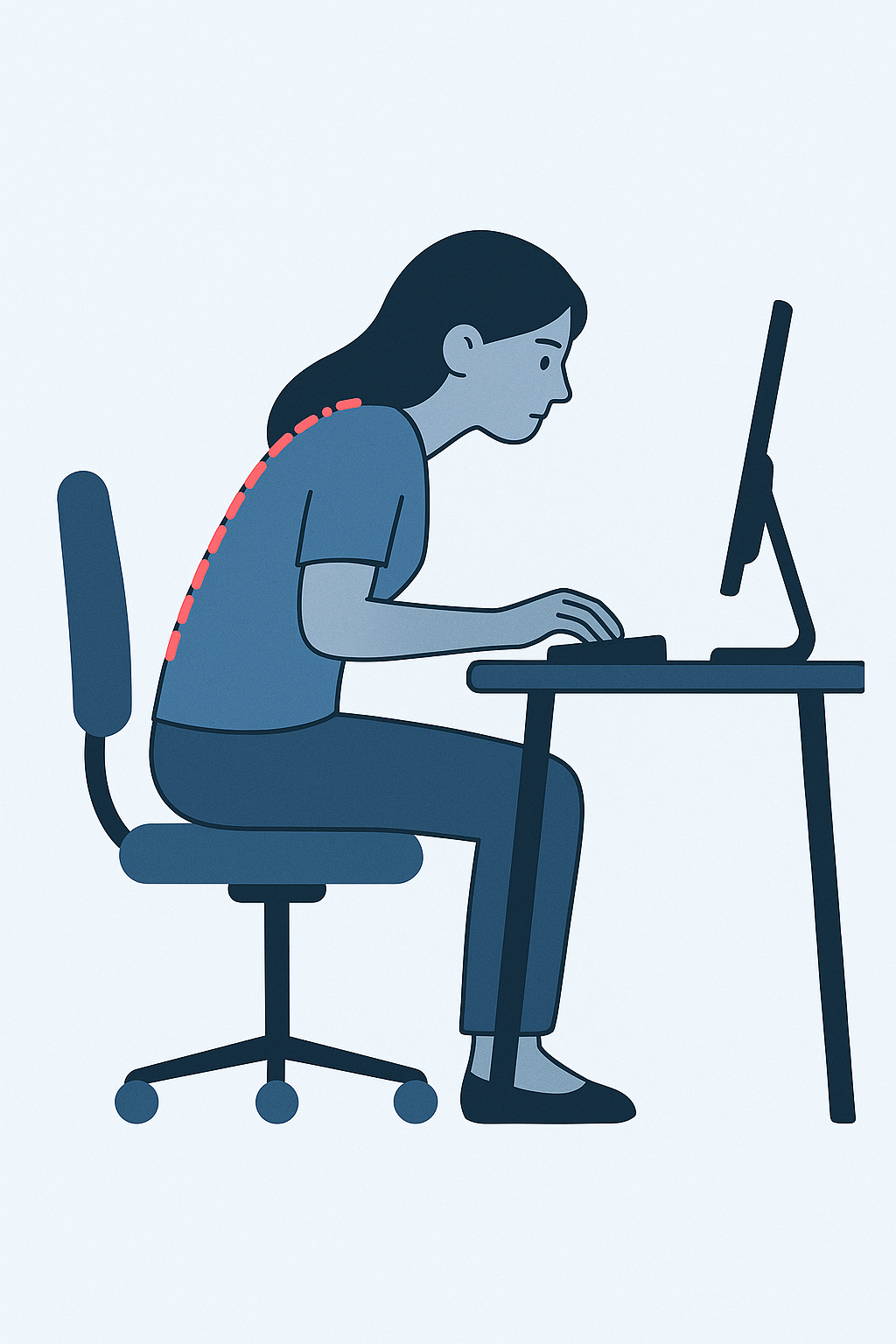
Person sitting at a desk with poor posture experiencing neck and lower back discomfort during computer work.

Most people don’t think of sitting as a health risk. It feels harmless. Normal. Part of the job.


But when you sit for hours every day—at a desk, in the car, on the couch—your body starts to change. And not in a good way.


What Sitting Does to Your Body


Your body is built for movement. When you stay in one position too long:


  • Your hip flexors tighten
  • Your glutes weaken
  • Your lower back takes on more stress
  • Your shoulders round forward
  • Your neck shifts out of alignment


This creates a chain reaction. One area compensates for another. Over time, that leads to stiffness, reduced mobility, and eventually pain.


This is my best guess based on common postural patterns seen in practice.


Why It Doesn’t Hurt Right Away


Here’s the part most people miss.


You can sit like this for months—or even years—before pain shows up. Your body adapts first. Pain comes later.


That’s why people are often surprised when:


  • Their back “suddenly” goes out
  • Neck pain starts without an obvious injury
  • Headaches become more frequent


In reality, the issue has been building quietly.


The Desk Job Pattern We See All the Time


A typical pattern looks like this:


Morning: You feel fine
Midday: Slight tightness in your neck or back
End of day: Stiff, tired, uncomfortable
Repeat daily → symptoms gradually worsen


Eventually, that “end of day” discomfort starts showing up earlier—and sticking around longer.


How Chiropractic Care Helps


Chiropractic care focuses on restoring normal movement to the joints that aren’t moving well.


That matters because:


  • Restricted joints lead to compensation
  • Compensation leads to strain
  • Strain leads to pain


Care is aimed at correcting the problem before it becomes chronic.


What You Can Do Right Now


You don’t need a complete lifestyle overhaul. Start with simple changes:


  • Stand up every 30–45 minutes
  • Adjust your screen to eye level
  • Keep your shoulders relaxed, not rounded
  • Avoid sitting in the same position for hours


Small changes, done consistently, make a real difference.


Bottom Line


Sitting itself isn’t the problem. Sitting too long, too often, without movement—that’s where issues start.


If you’re noticing stiffness, tightness, or recurring discomfort, it’s usually not random. It’s a pattern.


And patterns can be corrected—especially when you catch them early.


By Tamara Graham April 14, 2026
Small habits today determine whether your spine gets stronger—or slowly breaks down.
March 30, 2026
Why temporary relief isn’t enough to fix recurring pain
February 9, 2026
How Better Spinal Function Supports Everyday Life in Clifton Park 
By Tamara Graham January 8, 2026
Why ignoring minor discomfort often leads to major problems 
December 6, 2025
Understanding the Hidden Stress Desk Work Puts on Your Spine
By Tamara Graham November 25, 2025
How winter chores like shoveling snow can affect your spine
November 22, 2025
Simple ways to protect your spine and stay pain-free during the cold months
November 20, 2025
How holiday stress can lead to back and neck pain, along with ways to find relief.
November 17, 2025
Practical ways chiropractic care helps you move better and feel better.